Trend · 2026-08-27
Wānaka helicopter weddings: the permission behind every alpine site
The photograph is the easy part. The question worth asking first is who is allowed to land you there, and what happens on the day the aircraft cannot fly.
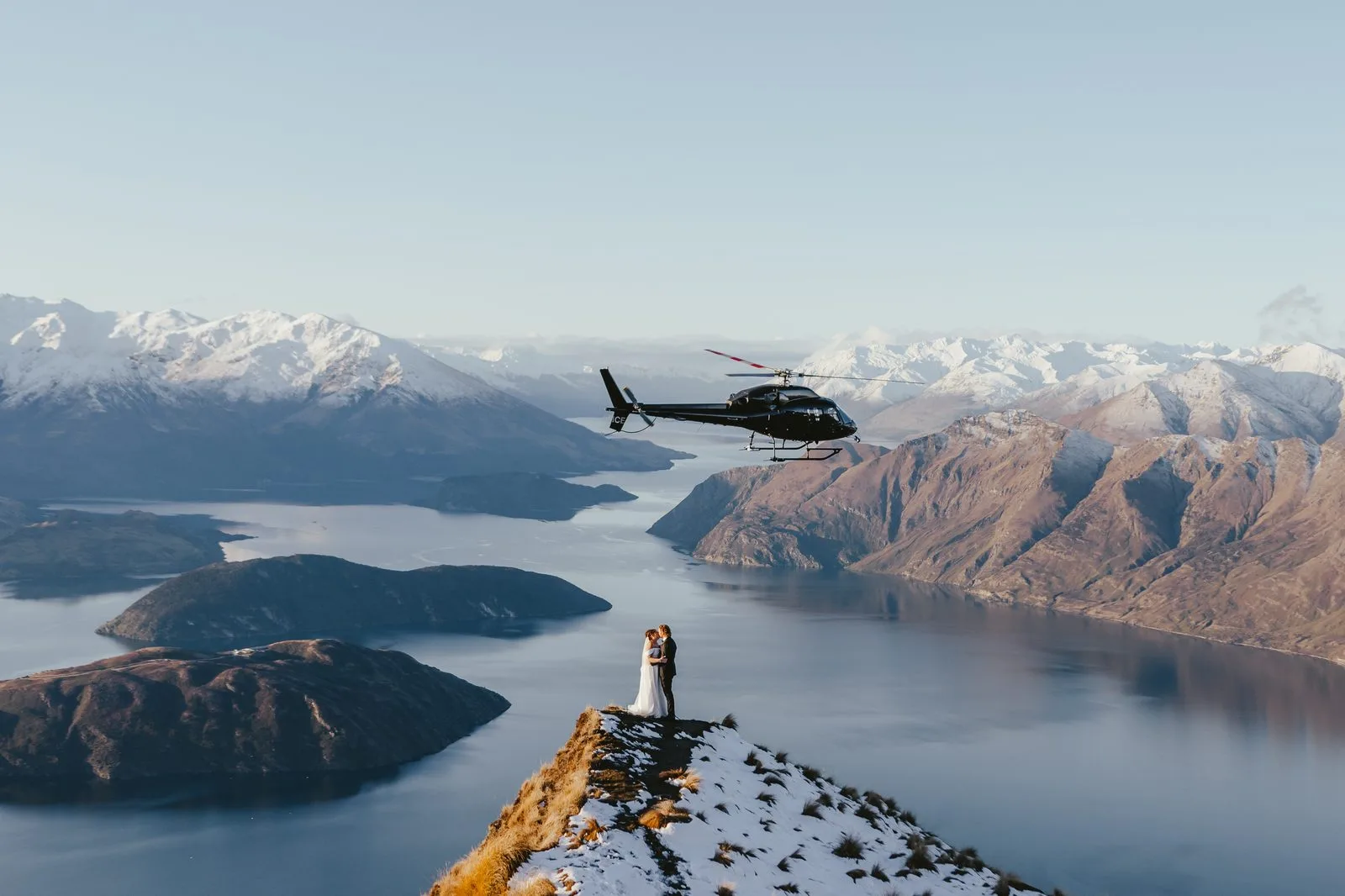
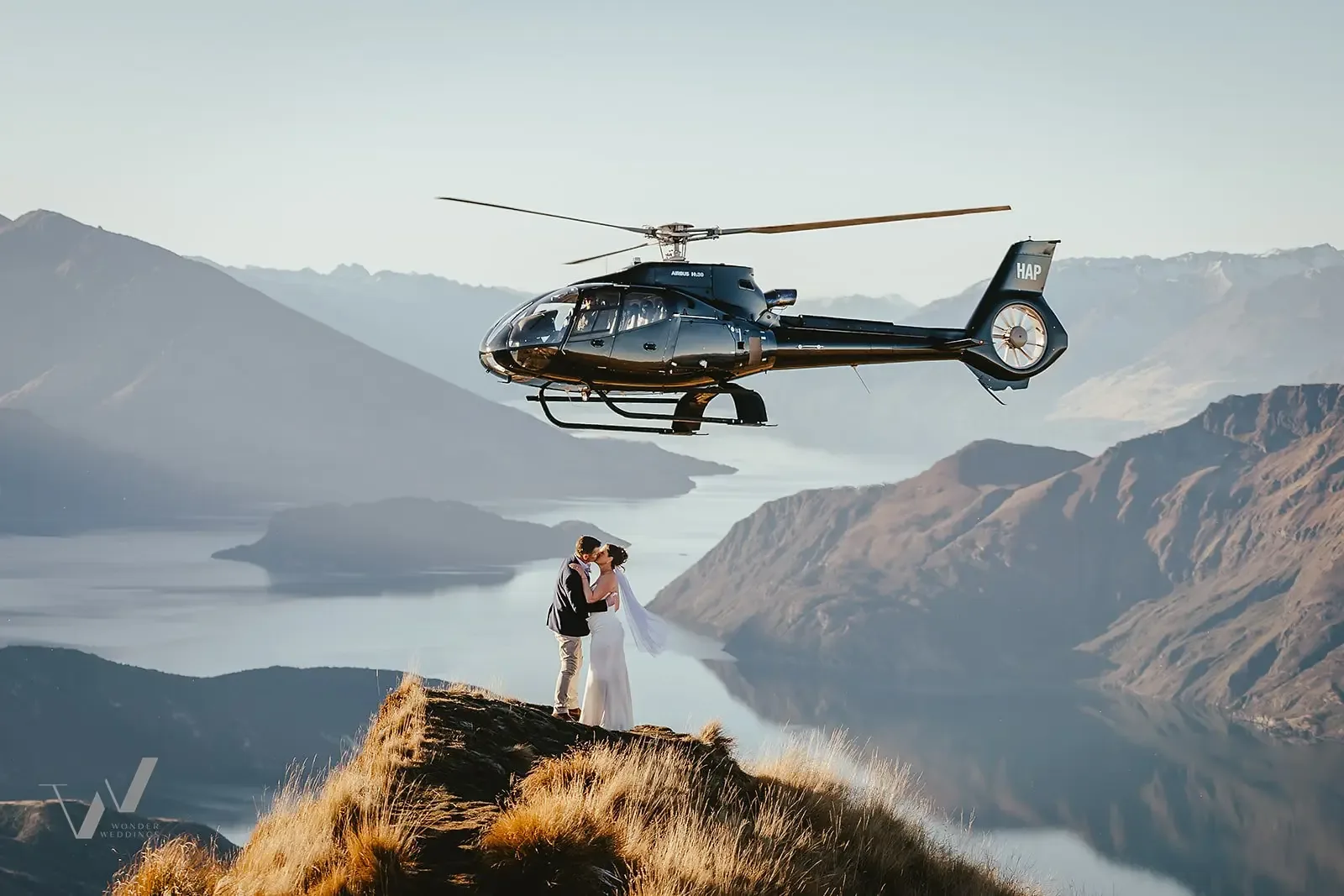
A fly-by along the Coromandel Peak ridge. Photograph: Wonder Weddings.
Short answer
Almost every alpine ceremony site above Wānaka sits behind someone's permission. Aircraft activity on or over public conservation land needs a concession or authorisation from the Department of Conservation. Council reserves need a council permit. Private ridgelines, Coromandel Peak among them, need the landowner's consent, which is usually held by the operator, not by you.
The trend
Alpine ceremonies grew faster than the paperwork conversation
Helicopter ceremonies are now a standard Wānaka format rather than an outlier, and the sites couples ask for by name are almost never freely available ground. DOC states that aircraft activities on or over public conservation lands and waters must have a concession or authorisation, and that this covers commercial operations as well as private recreational activity.
On council land the parallel requirement is a reserve permit. Queenstown Lakes District Council publishes what it asks for when a wedding or civil union takes place on its reserves. On private high country, the permission is a landowner arrangement, and it is specific to the operator who holds it.
None of this stops you having the day. It changes who you ask, and it means the honest question to an operator is not "can we land there" but "what permission do you hold for that landing, and what is the plan if we cannot use it".
Sources Department of Conservation · Queenstown Lakes District Council · last checked 2026-08-27
Ask first
Who holds the permission, and who calls the weather
Two questions decide whether an alpine ceremony is a plan or a hope. Both should be answered in writing before a deposit.
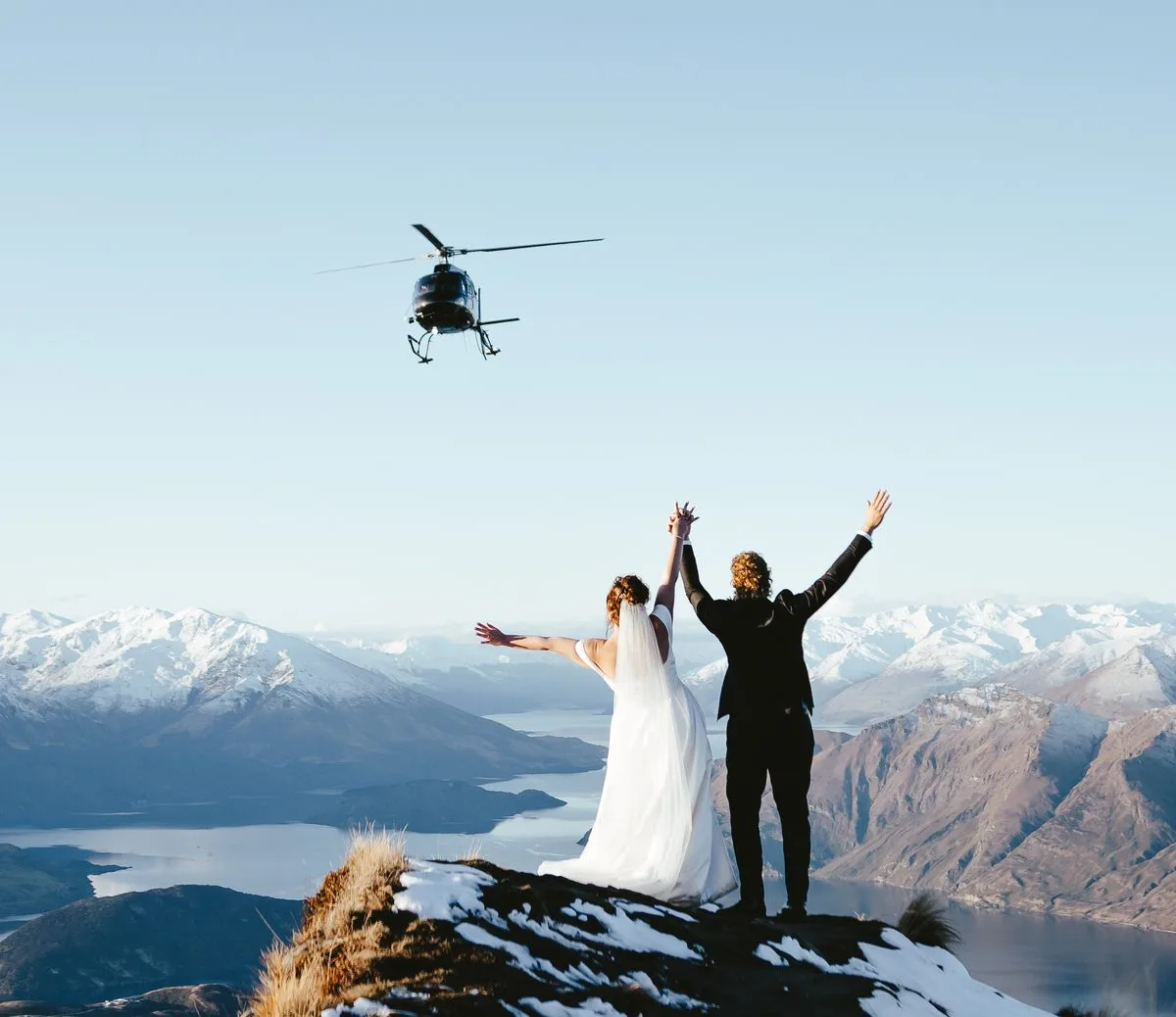
A fly-by above Lake Wānaka. Photograph: Wonder Weddings.
Checklist
What to put to an operator, in writing
- What permission covers this site?
- A DOC concession or authorisation, a council reserve permit, or a private landowner arrangement. If nobody can name it, treat the site as unconfirmed.
- Who decides whether we fly?
- The pilot, on the day, on the conditions. Ask what the decision window is and how you will be told.
- What is the fallback site?
- A named alternative, ideally a ground-access one, decided before the day rather than during it.
- How is the flight priced?
- Per aircraft, not per person, and usually per landing. Confirm what a second landing adds and what happens to the fee if weather cuts the flight short.
- What are the refund and rebooking terms?
- Ask for the written weather clause. This is the single term most worth reading twice.
- How long do we have on the ground?
- Landing time is finite and it has to hold the ceremony, the witnesses, the photographs and the walk back to the aircraft.
Questions to ask before booking an alpine or helicopter ceremony. Answers are operator-specific; nothing here is a quote or a guarantee.
Sources Wanaka Helicopters · Department of Conservation · last checked 2026-08-27
The weather call
The good operators fly the plan, not the photograph
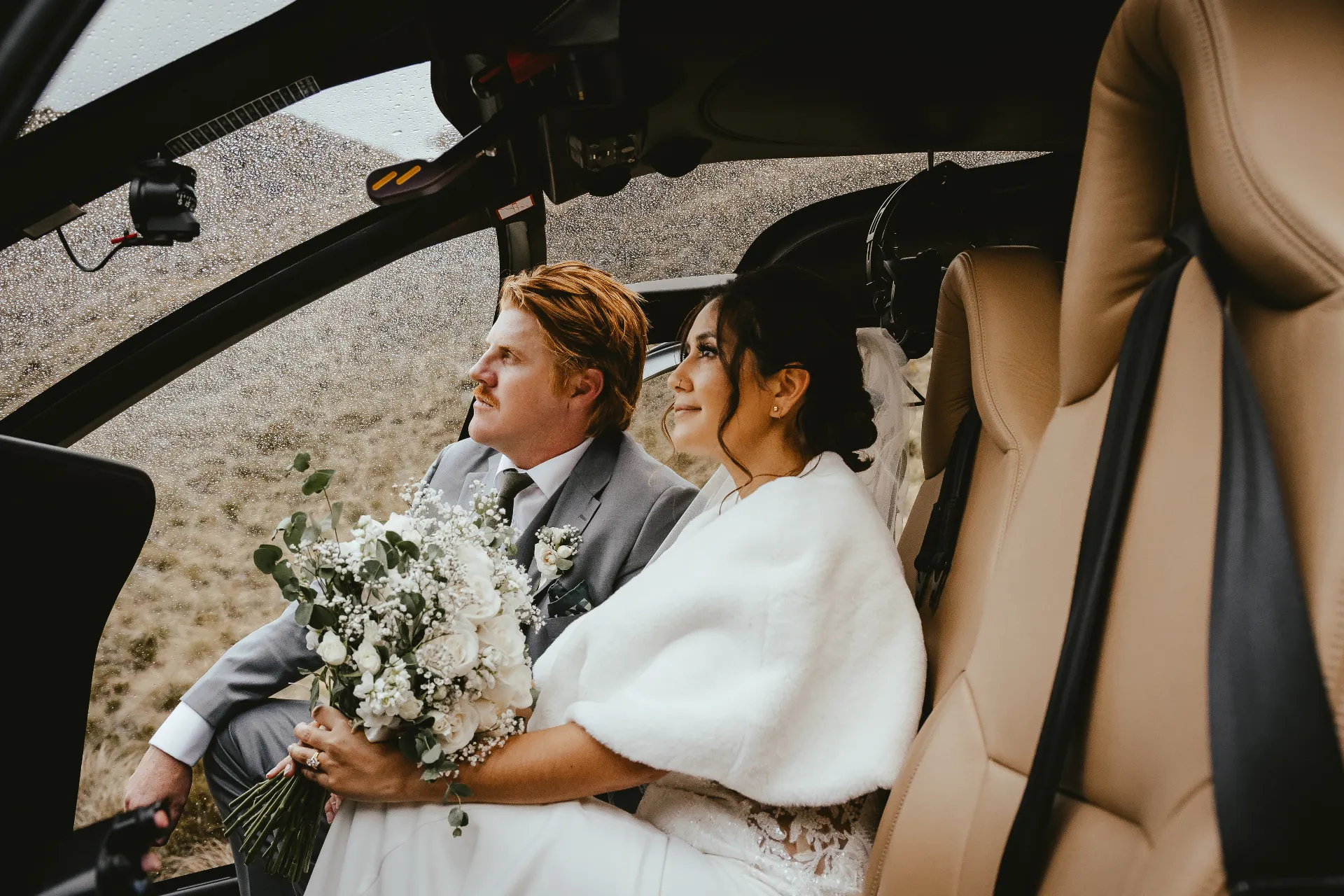
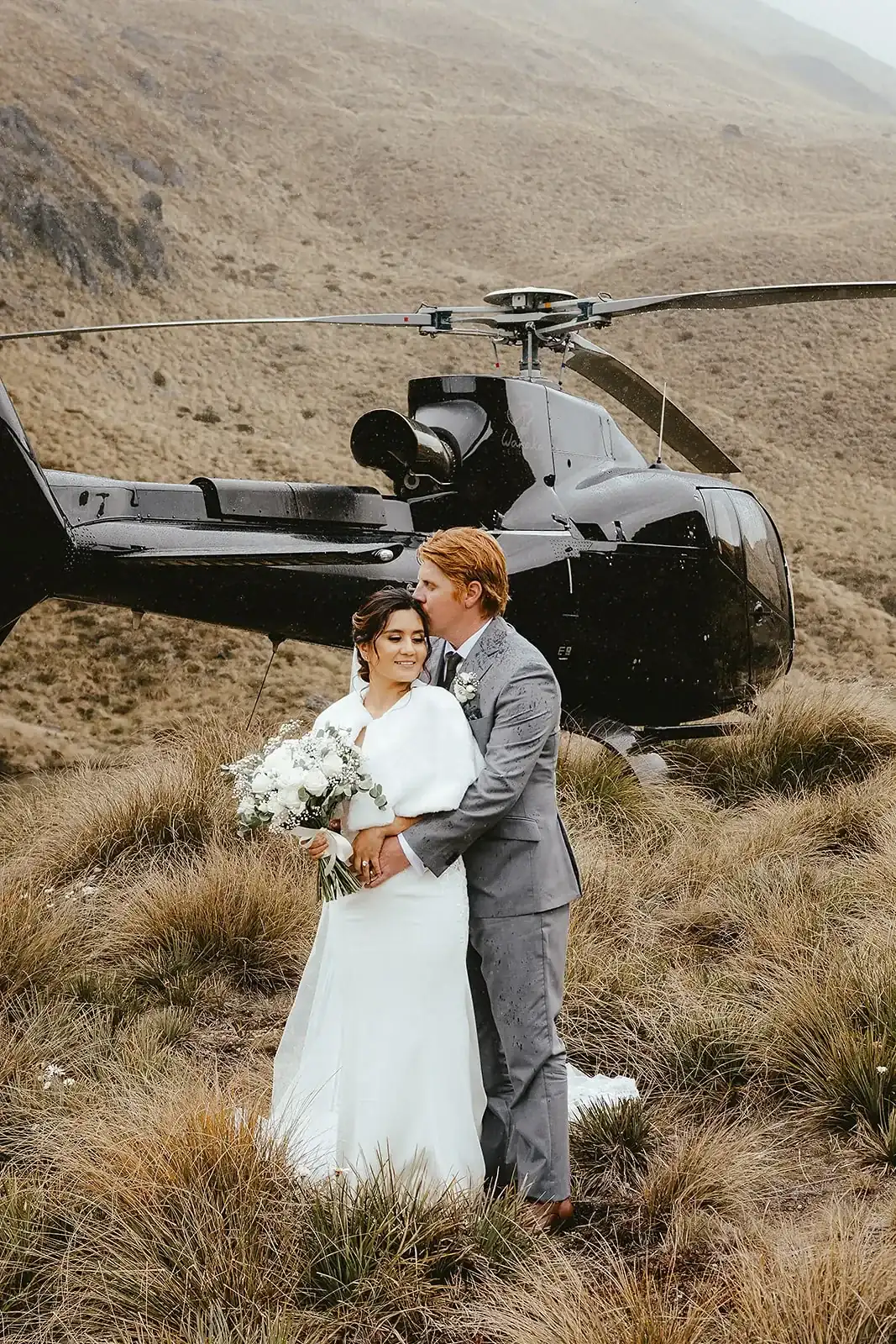
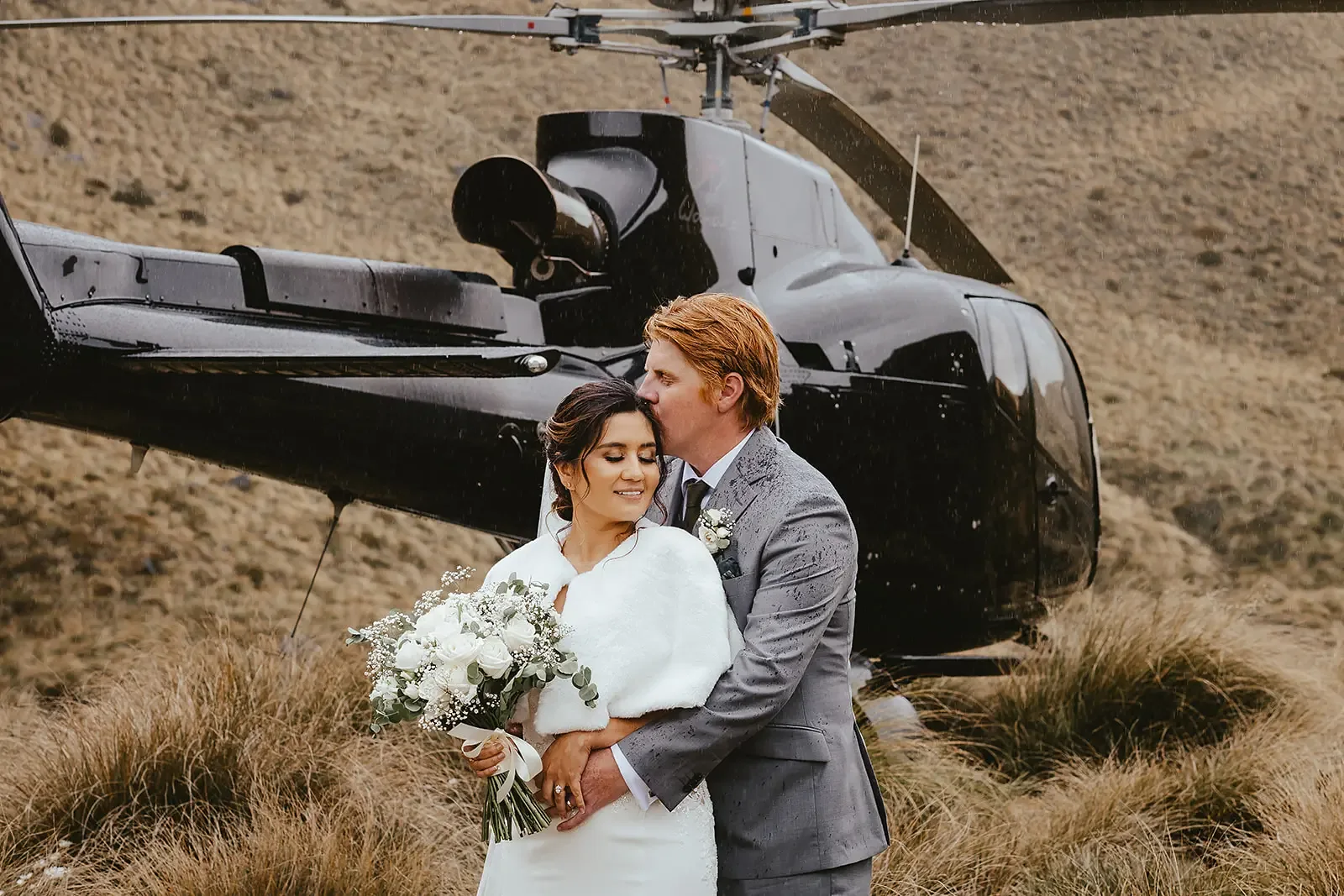
Wet cloud on the tops is the normal reason a landing moves. Ask who makes that call, how long before the ceremony it is made, and what the written fallback is.
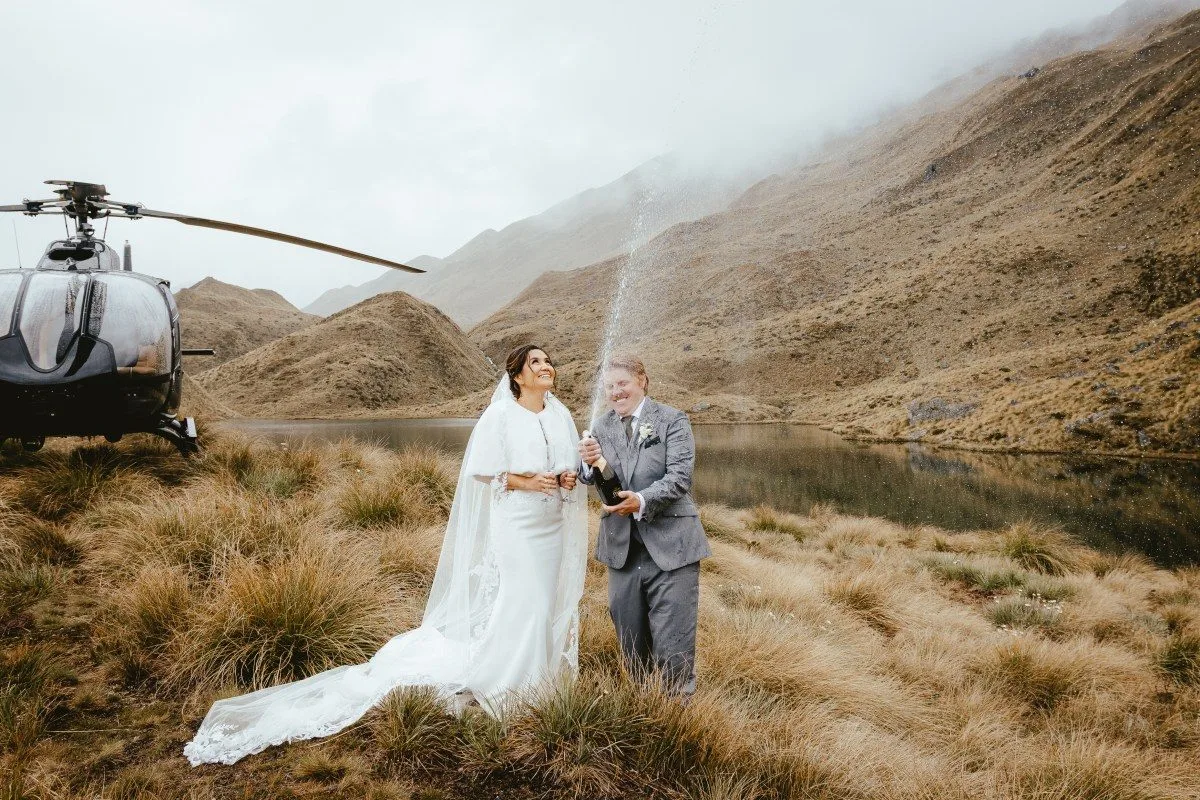
An alpine landing in wet weather. Photograph: Wonder Weddings.
Trend
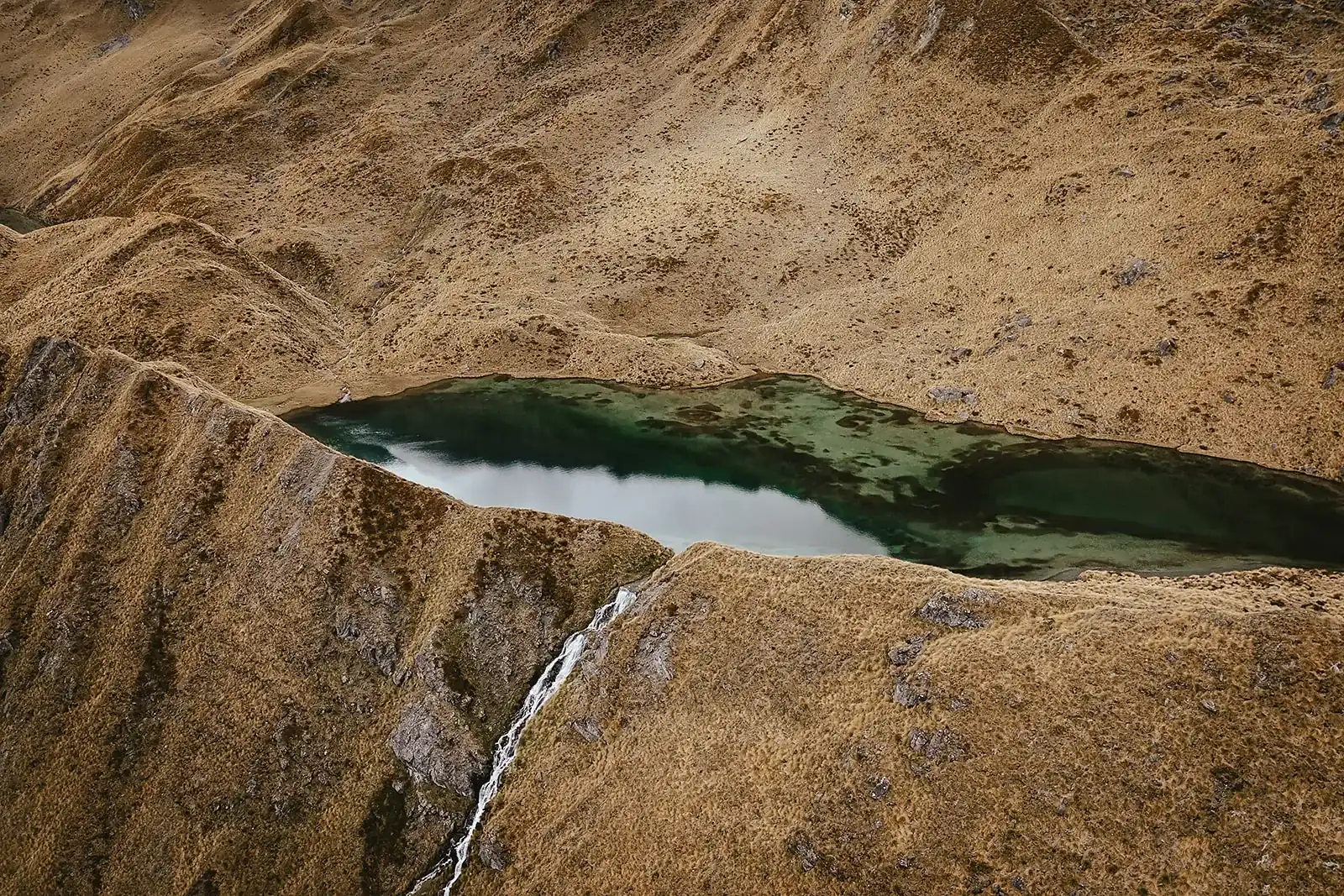
Alpine tarns are the site couples now ask for by name
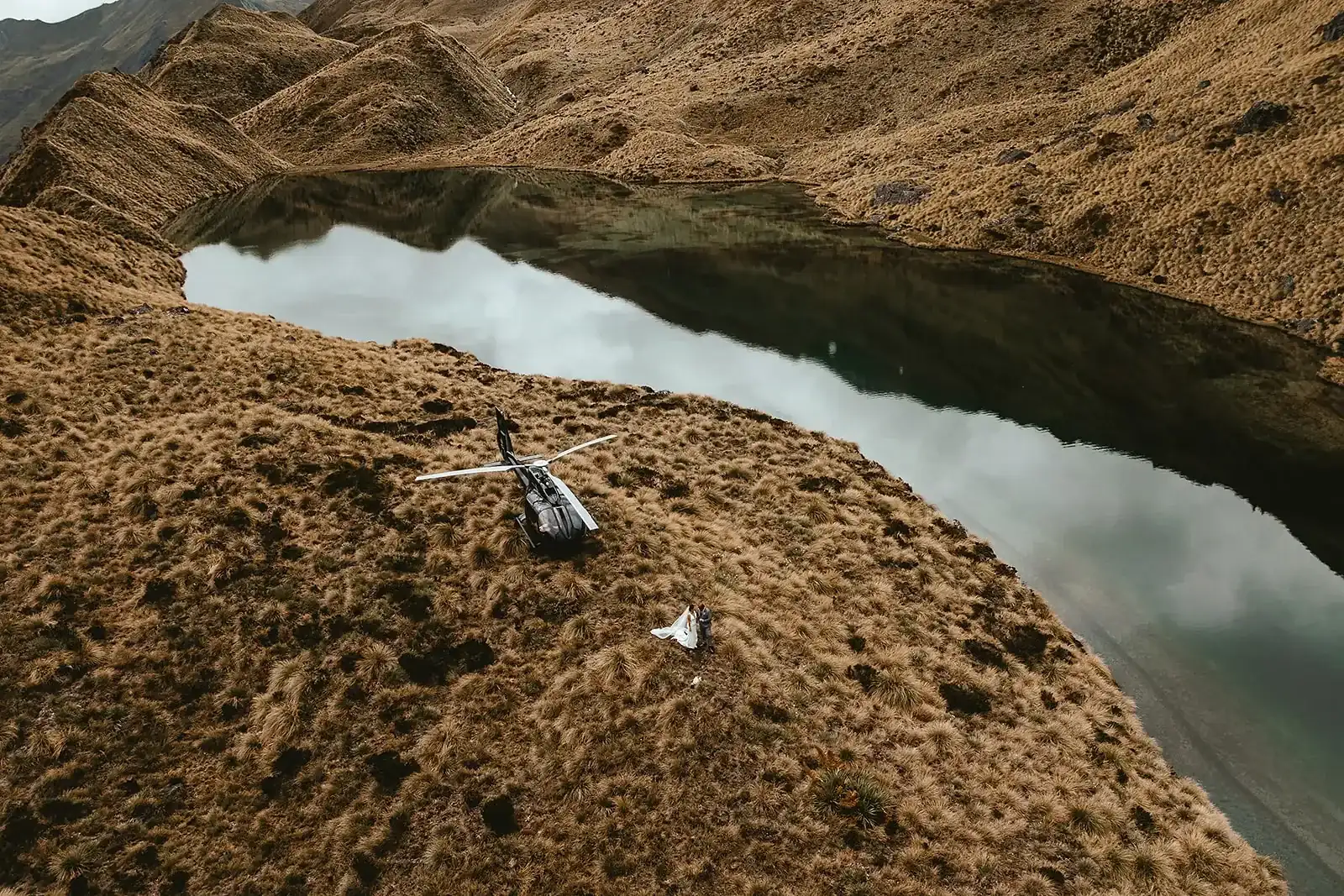
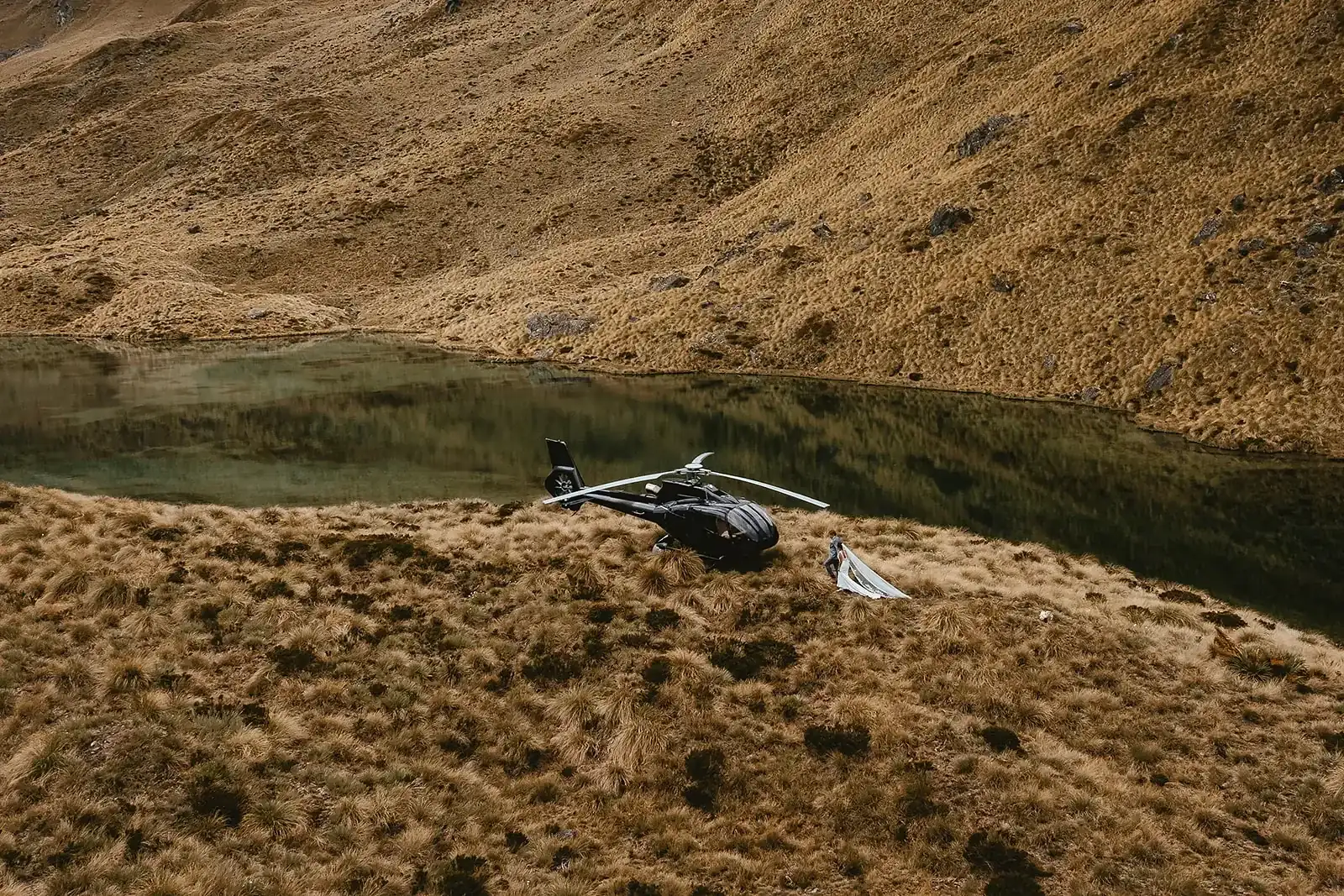
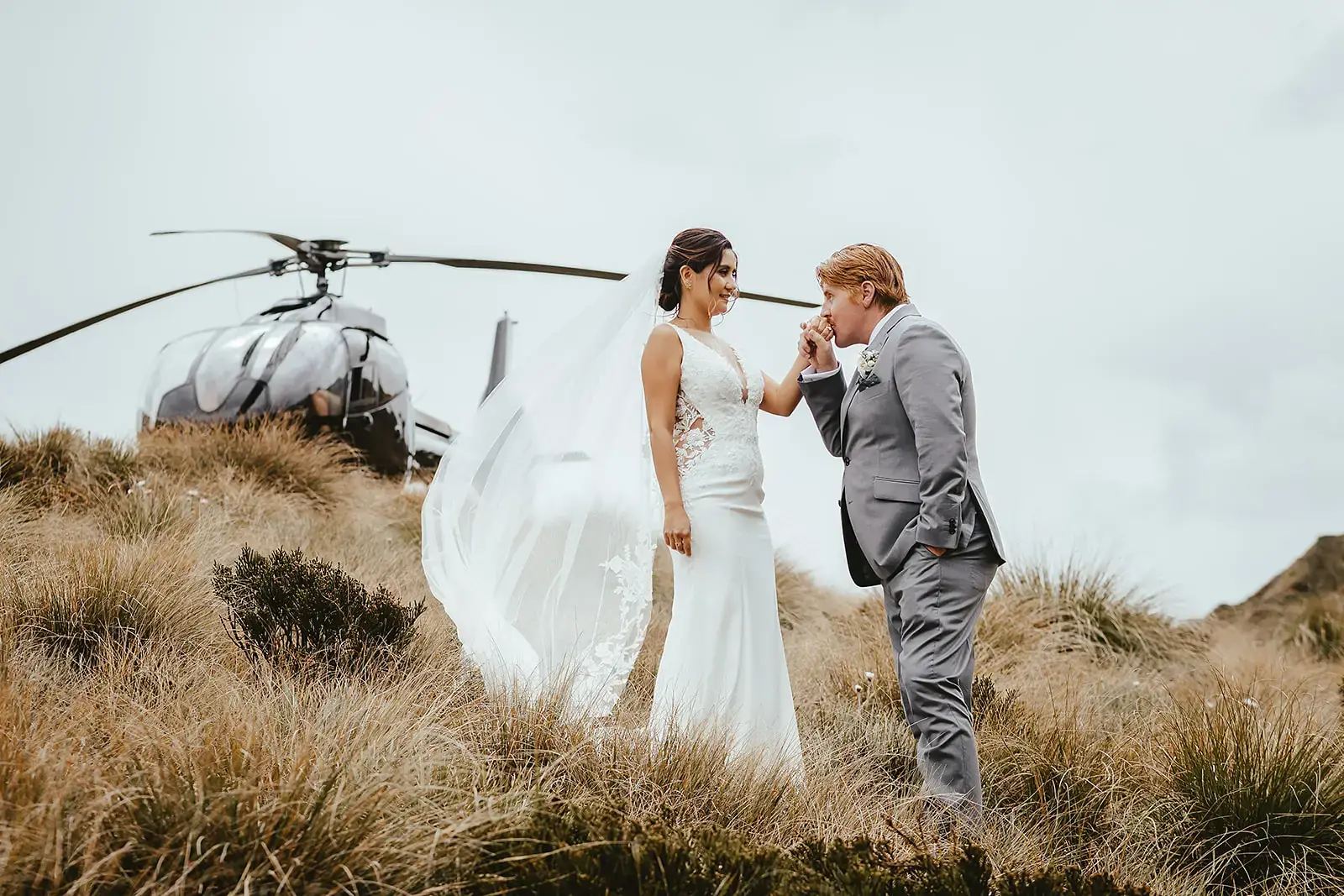
A few years ago the request was simply "somewhere with a view". Now it is specific: an alpine tarn, a tussock saddle, a snow landing in winter. Those sites are chosen as much for the walk from the aircraft as for the backdrop, because a landing site with twenty flat metres beside it is the difference between a ceremony and a photo stop.
Every one of them still comes back to the same question, which is who is permitted to put an aircraft on that ground.
On the ground, after the landing
Fun trend
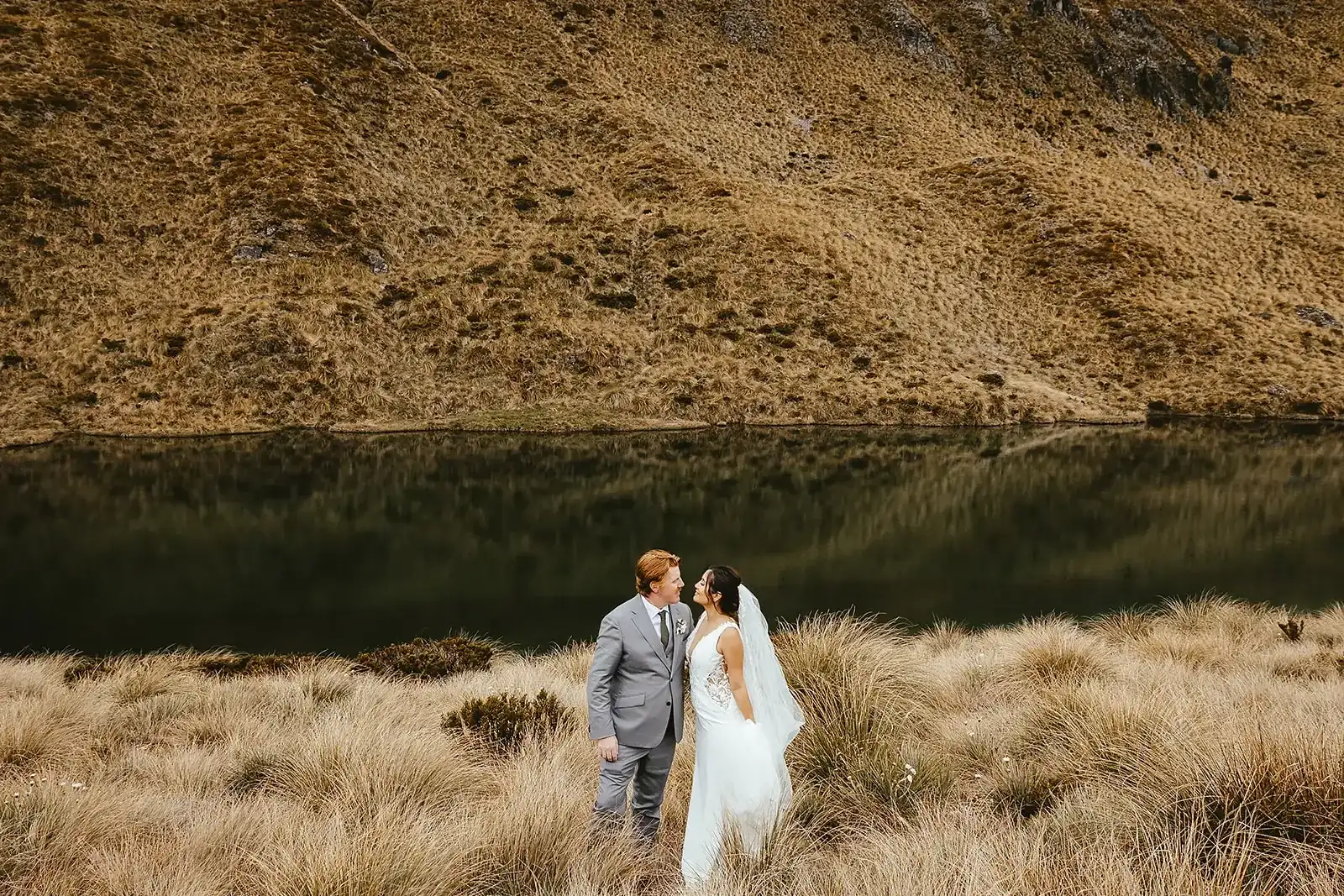
Couples are buying the second landing, not the longer party
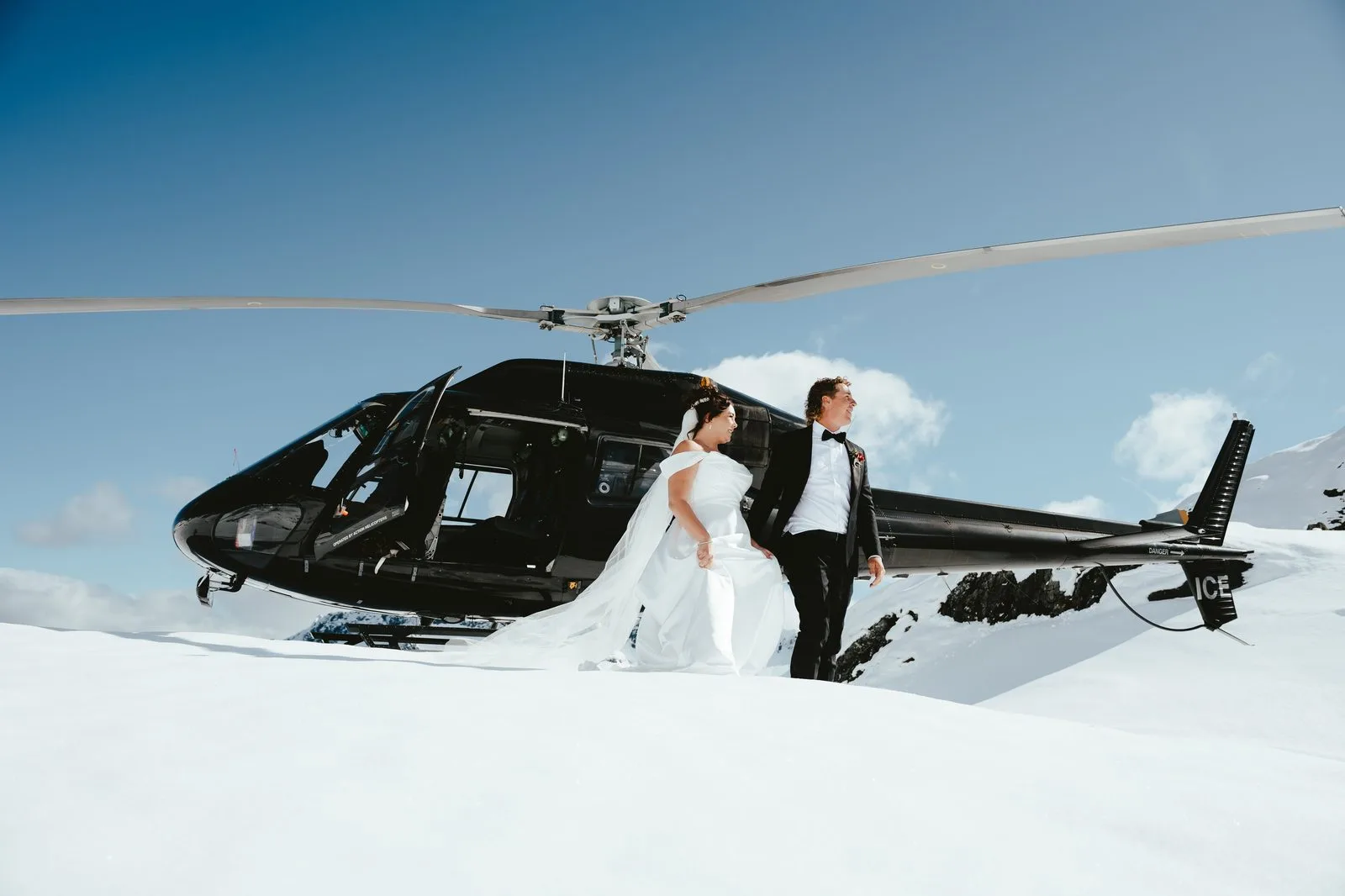
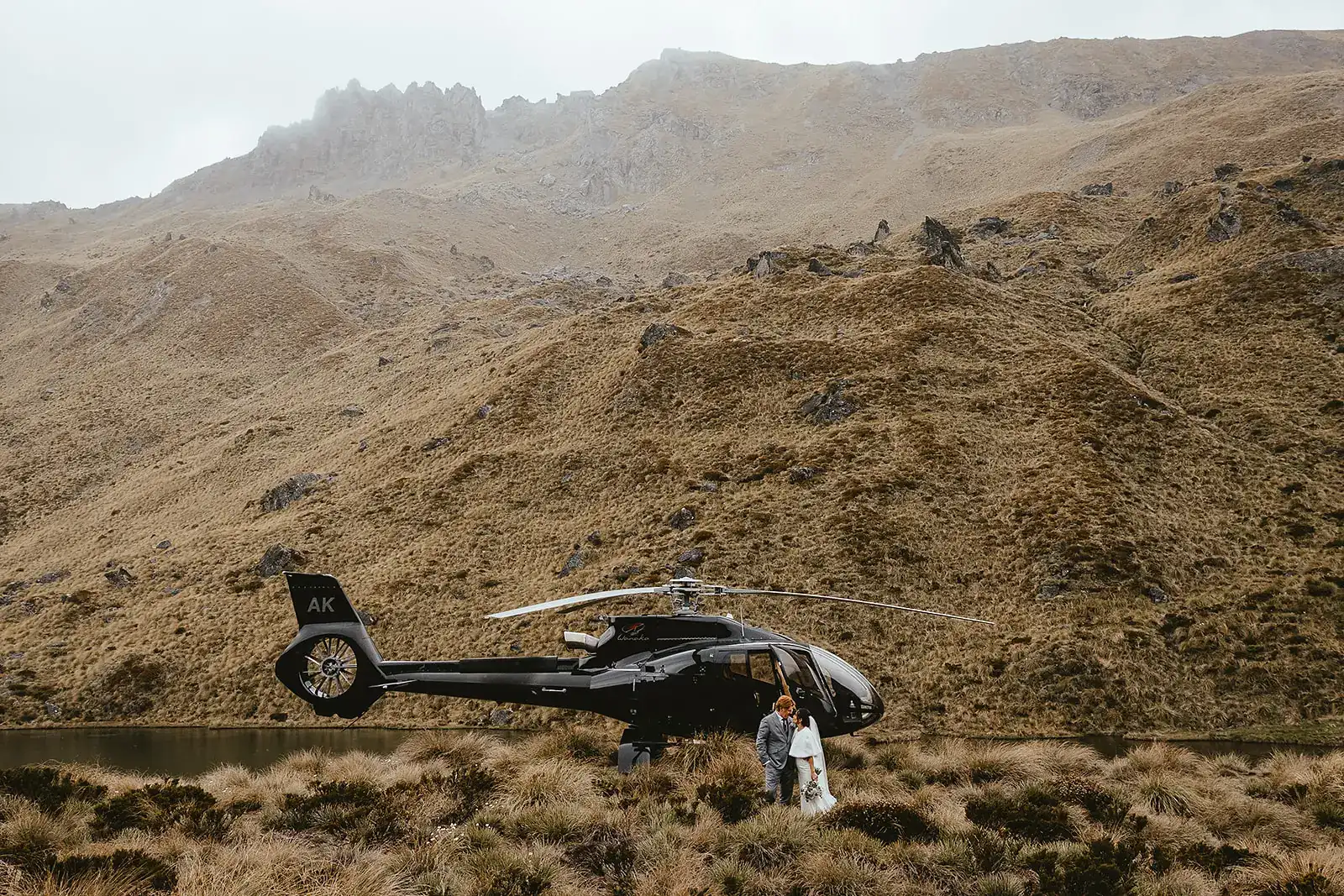
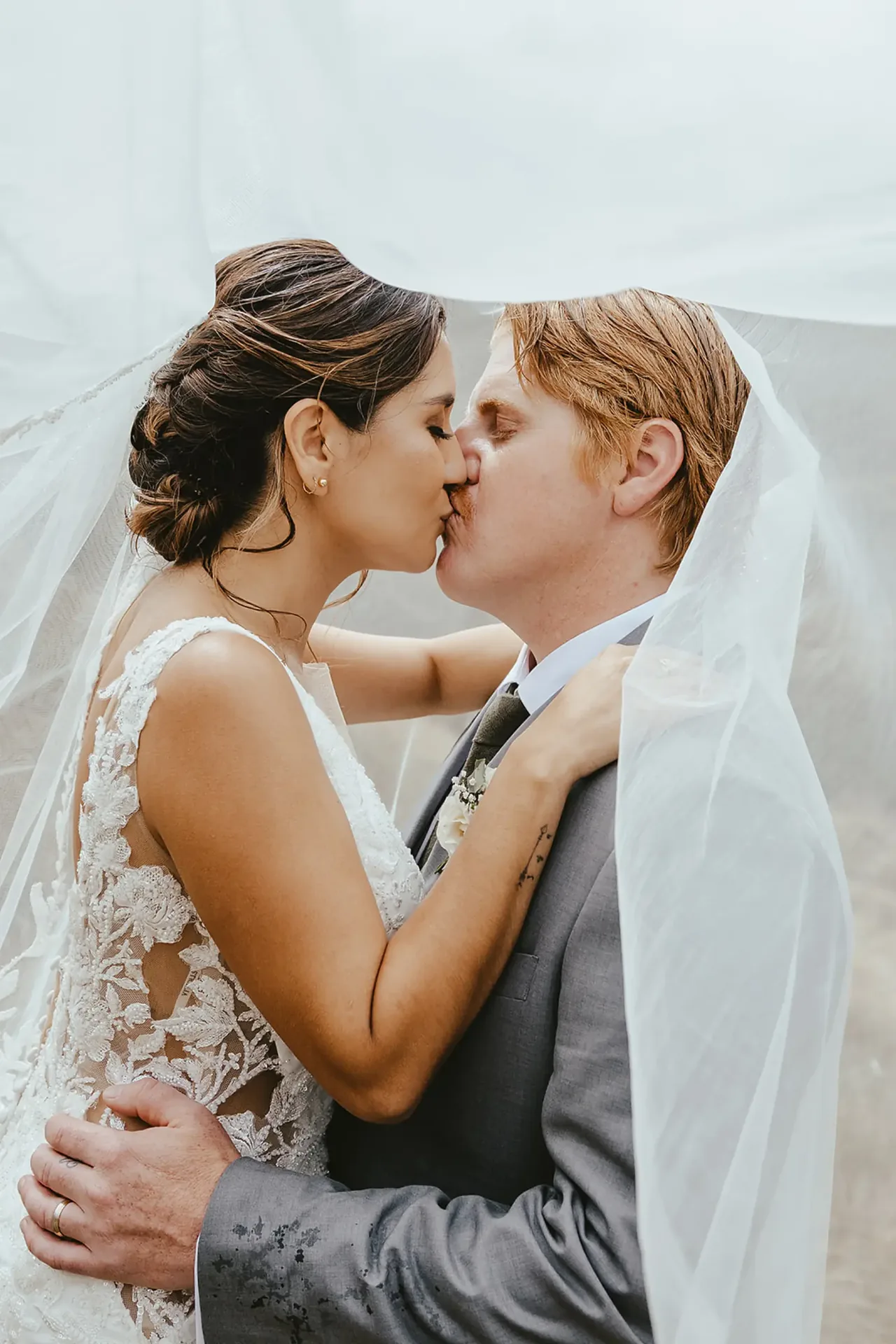
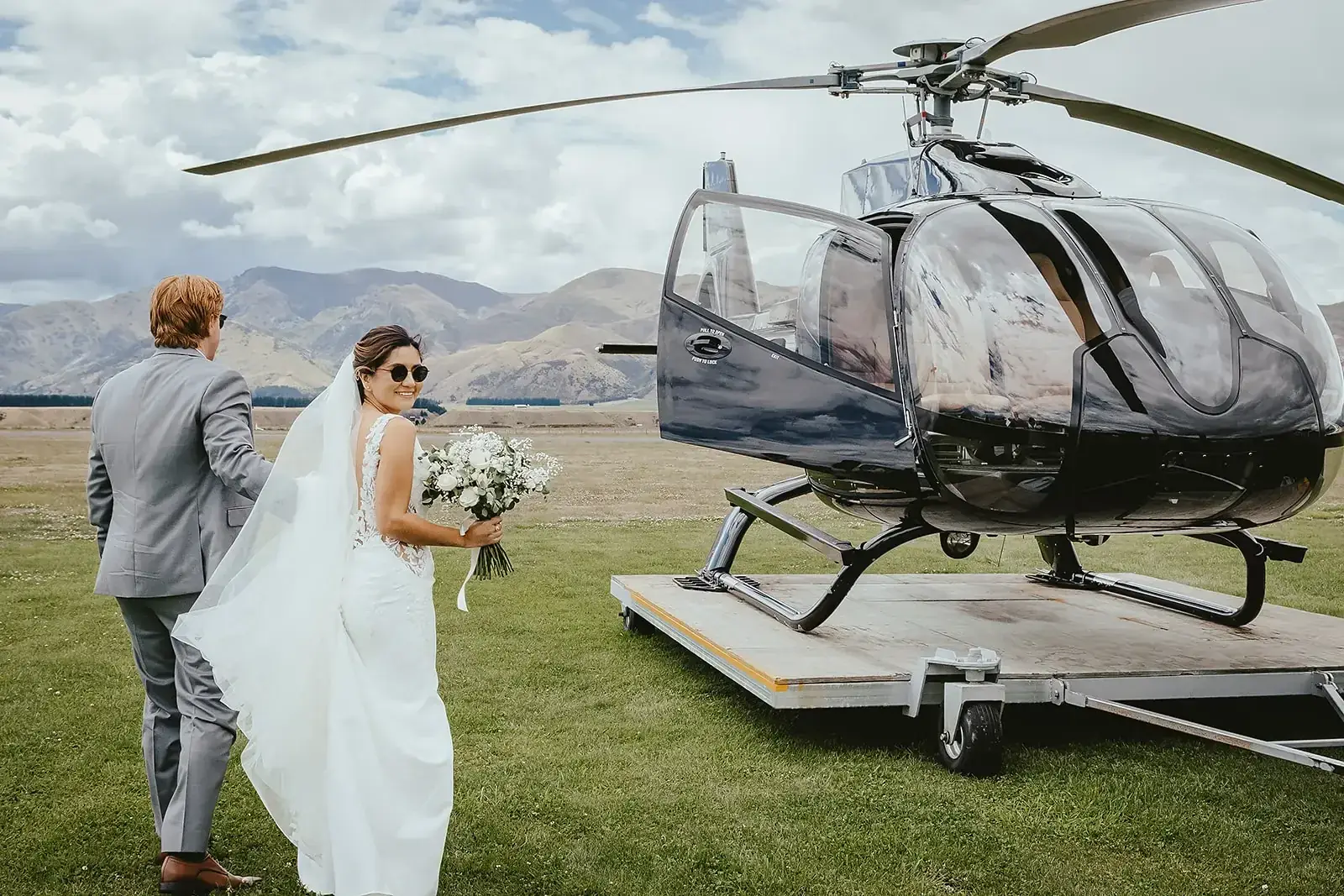
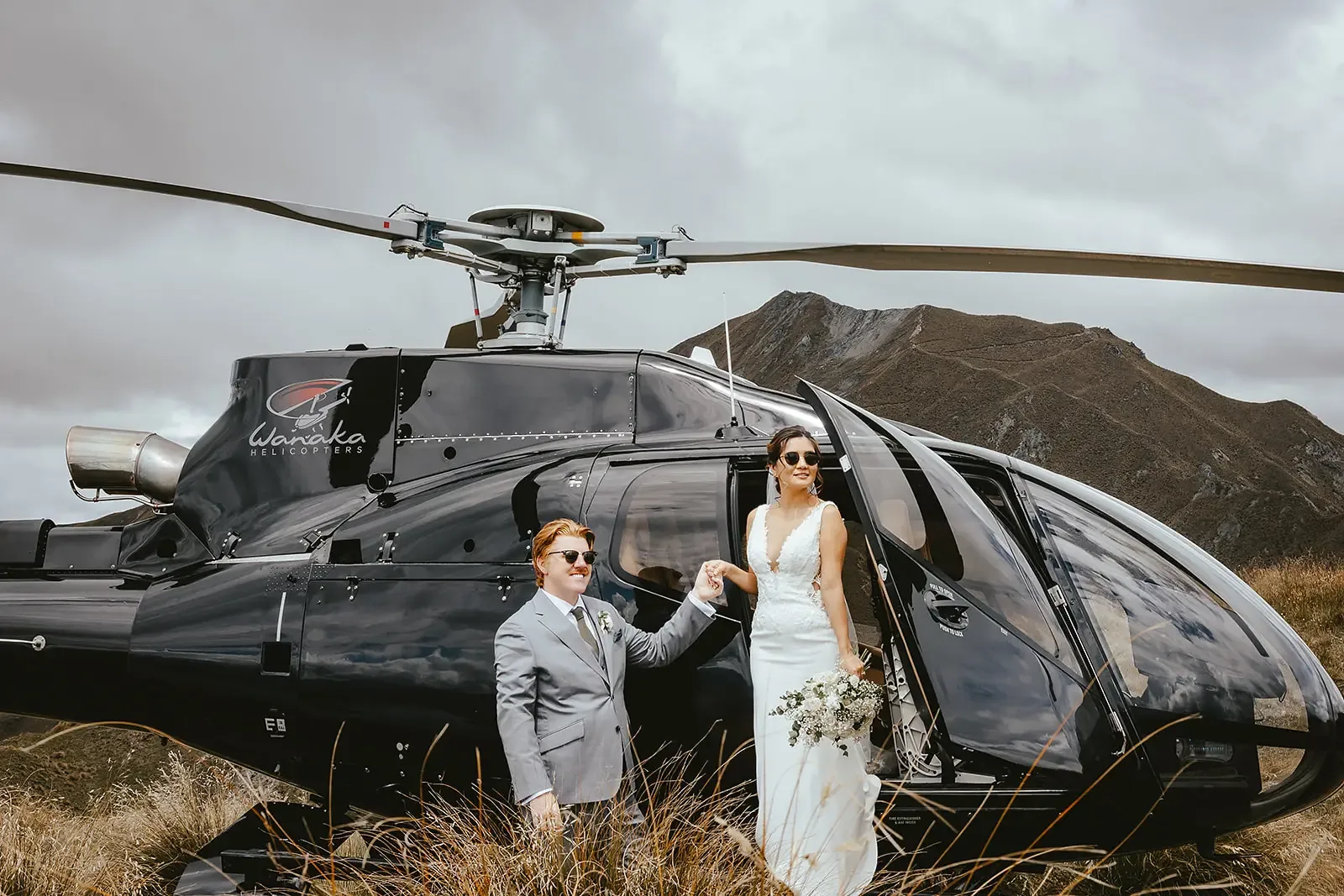
The upgrade small Wānaka weddings actually choose is another landing: ceremony on one site, portraits on a second, often at a completely different altitude and in different light. It is priced per landing rather than per guest, which is why it appeals to a two-person day.
Confirm the number of landings, the ground time at each, and what happens to both if the cloud lifts late.
Airfield to ridge
Access
A walk-up viewpoint is not the same decision
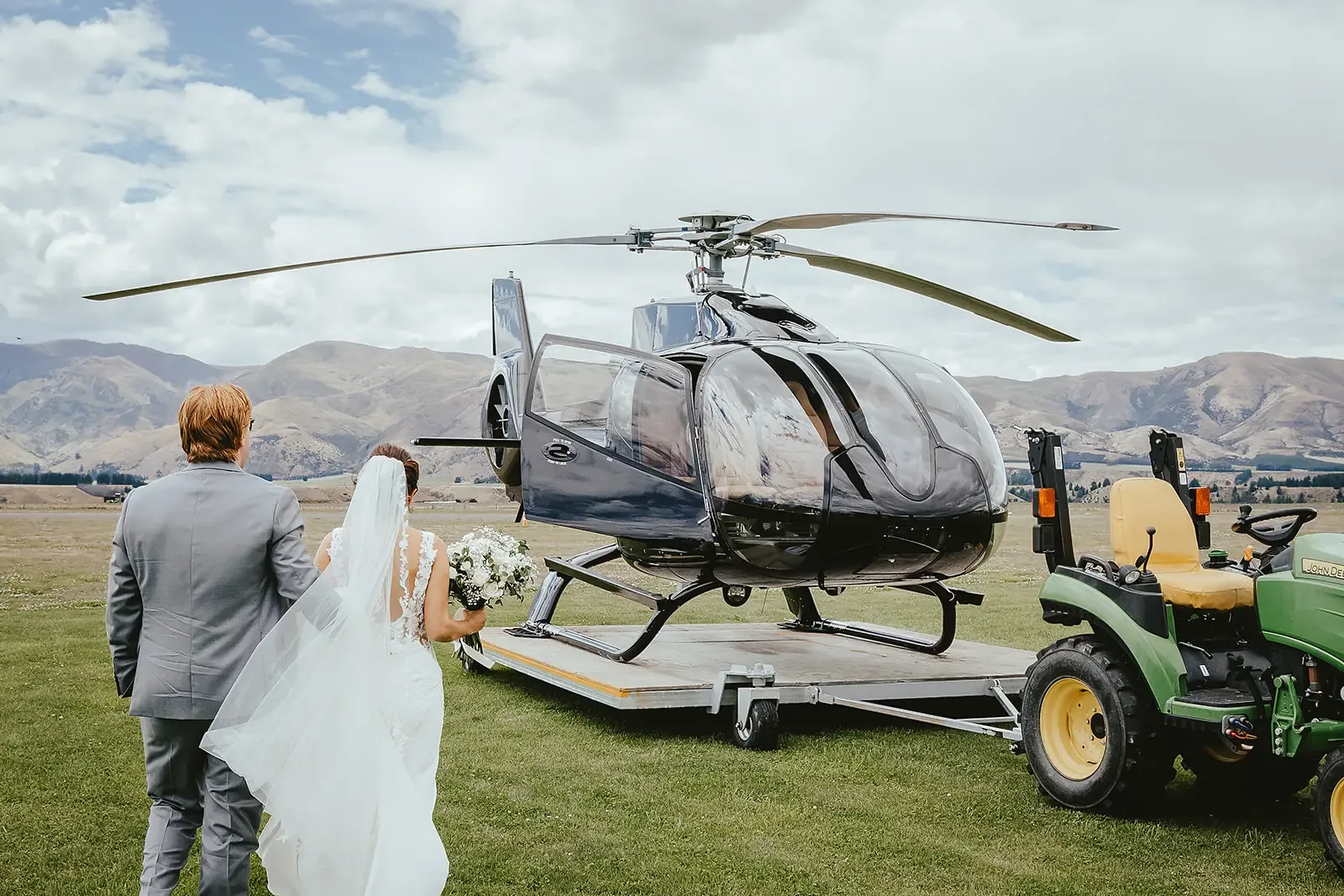
Roys Peak is a public DOC track, so its summit ridge is reachable on foot without a flight, and it is shared with everyone else on the track that day. Coromandel Peak, the ridge most couples actually have in mind, is helicopter access with landowner permission, which is why it is private and why it cannot be walked.
The Coromandel Peak page sets the two mountains side by side, and the legal and permits page keeps the official sources and checked dates in one place.
Sources Department of Conservation · last checked 2026-08-27
Talk to a planner
If you would rather have someone hold the permissions, the weather call and the running order for you, Wonder Weddings plans and runs these days in Wānaka.
Planning by Wonder Weddings, an affiliated brand.
Related
Where to go next
More trend pieces are in the journal.
Reviewed by Cristian Batista, CEO and founder, Wedding Machine Group on .
Want a person to help with this?
Wonder Weddings plans and runs weddings in Wānaka and the wider Southern Lakes. If you would rather talk it through than read another guide, start there.

Planning and photography by Wonder Weddings, in the same group as this guide.
This guide is written, maintained and funded by Wedding Machine Group, founded by Cristian Batista. Enquiries sent from this site go to Wonder Weddings, the planning and photography brand in the same group, and some readers become its clients. Heli Elopements and Eureka Films are also brands within Wedding Machine Group, sister companies, not independent recommendations.